Tuesday, September 3, 2013

Day Hike Two--Through the High Pastures of Conag, A Naturalist's Hike


Malan bakır le le çune waran le (Oh, we moved house, we went up to the high pastures)


                In the old days, before the mountains were mined and bloodied in guerilla battles, young men and women would go up in the summer with their herds to the waran, the local (and plural) Kurdish word for high pastures (yayla in Turkish). They’d camp there from May to September, grazing their animals, flirting with one another, and sleeping at nights under the grandeur of the Milky Way. They stayed in the tiny holik—or pasture cottages at night, but there were bonfires, songs, and, according to Dede, lots of flirting. In standard Kurdish, waran means also ‘homeland or hearth’, which may explain why there is so much nostalgia for them. In the  Xolxol region (once a province of Kiğı), each village had its own pasture land, and Delal had never seen hers, so we persuaded our neighbor, Mehmet Abi, who had spent his boyhood summers in the waran, to take us on a hike up through them. Which brings us to today’s entry, ladies and gentleman, on a 10 hour day walk from Conag to Xolxol through the old pasturelands, through nostalgia, ruin, renewal, and breathtaking scenery—all with a bit of history tossed in, both natural and human (of the oral kind).

                Now just briefly, there’s going to be a lot of information in here that my Southern father called ‘not important but nice to know’. Why? The Kiğı region where my wife’s village is located suffers from an information blackout. There are clearly lots of important things going down and interesting things growing here but no knowledge whatsoever about what the hell any of it is—the reason? Well as mentioned in my previous article, lots: indifference, remoteness, a 30 year guerilla war, poverty, a desire by nationalists to erase all traces of Kurds, Alevis and Armenians from the records (the paper documents themselves have all been erased or destroyed). The information blackout is archaeological (just what the hell is an Urartruan castle doing in Xolxol (Yayladere)? How is it connected to the one in Bağın that’s actually on archaeologists’ maps? What about the prehistoric drawings in the caves of Pargasor? Are the ones at Abvank part of a larger system?) Biological—no one knows the names of the wide diversity of animals and plants around here, or what you can do with them.

                Which brings me to another point—a few farseeing souls are trying to figure out a way to bring a sustainable economy to this area without destroying what makes it worth saving (a la the way the government’s dams and other projects have wreaked havoc in nearby areas) Or at least, create some sort of awareness of the value of this place before someone comes along and tries to build a mall. So some of the nice-to-know-stuff will include uses I’ve discovered for local plants. By the way, don’t take everything I say as the last word on these plants—I spent hours and hours and hours researching, checking out everything from Wikipedia to herbal medicine websites to botany books checked out from the library, but it’s easy to make mistakes because the sources are not organized and lots of these plants look alike. I only included the ones I am relatively certain of.

THE HIKE TO THE WAR

We woke up early in the morning to avoid being out on the bare rock face in the heat. Our first target was an old ruin on the ridges called Derdivan. It’s just barely visible from the fields of Conag looking north and slightly east where a ring of rocky peaks shadow the village.

We started our trek along the trail that follows a dike to the spring of Merga Axe—the Ağa’s Meadow. Conag is known for its water—springs are bubbling out of the rocks wherever you look. Apparently it has always been known for its water and for this spring in particular. Mehmet Abi tells us of the Turkish lord (Bey) of Temran Village , who so desired the water of Conag that he sent a servant every day to retrieve it—a ride of a hundred kilometers or so. The servant figured he’d cut his journey short and stop at a closer fountain along the way, but the Ağa tasted the difference, beat him to a pulp, and then sent him back for the true water. This cruel Turkish lord of Temran (Darman in Armenian) apparently was especially cruel to the Armenians of the village—and had been appointed years before the genocide by the Ottoman government to whip the local Armenians into line—the Russians Empire was looming to the East and the Ottomans were afraid the Armenians would embrace the cause of their Christian brothers. This an oral story picked up by Mehmet Abi on a trip through the region. I looked up the Lord of Temran but couldn’t find anything specific, though Darman clearly played an important role in the genocide. From that angle, there’s tons of information.

                There seem to have been many ties between the Conag region and Temran in the past (some of the villagers still have relatives there today) Delal’s uncle’s paternal grandmother was a hidden Armenian, born in Temran and moved to Kiğı before the genocide started. The Derdivan to where we were headed might have been some sort of shrine to which Armenian priests from Temran came to pray (this according to Cevat Eran’s book Bingölün Yayladeresi). But again, I could find nothing concrete.

                The path winds past the spring and through the ruins of the old village mill. It is lined with penny royal plants (pung in Kurdish), a species of mint with purple flowers. The Kurds of Conag still use penny royal in their cooking and apparently it has been used medicinally in the past to spur on a woman’s period. There are also large bushy trees called qultifang (black elderberry or Sambucusnigra) near the water—the branches and fruit are supposedly good for colds and the urinary tract—but the green parts are all poisonous and contain cyanides, as do the unripe berries. And of course you can make jelly from the berries. A study showed that it also was useful against Influenza B. Take a look.
The waterfall on the ya Bêbin

From the mill, we take a path that winds up around above the creek toward a small waterfall. The bath is called the Rêya Bêbin—the Watershed Road. Before we hit the waterfall, we turn up and right toward an outcropping of red and black rock that is shaped either like a ruined wall of a castle or a camel—depending on who you ask.

In the rocky, dry areas along the foothills of these mountains, we run into a pretty wildflower called the marsh mallow (our English word marshmallow comes from an extract the ancient Egyptians used to make a candy from this plant). The scientific name is Althaea officinalis or the deve gülü in Turkish and it apparently has a lot of medicinal properties. In fact its genus name Althaea means ‘to heal’ in Greek. The flowers and young leaves can be eaten in salads, the root can be used to treat sore throats, and a gargle rinse made from the plant can treat mouth ulcers (useful for me and my mom) The root extract is also sometimes used to flavor Middle-Eastern versions of helva.

The Marsh Mallow
 

Some of the birds here are quite striking in color. We see, at different points, bright yellow and black golden orioles (sarıasma in Turkish) and a luminous green bird called a blue-cheeked bee-eater. (Dede told us it was a şalul in Kurdish though that translates as hummingbird, and this is no hummingbird. In Turkish its mavi yanaklı arıkuşu) There are also lots of magpies (qelebast in Kurdish), and black and white crows (qirik), and a funny looking bird with a crest called ‘diksuleyman’ in Kurdish but a hoopoe in English. The hoopoe’s cry is very distinctive and you hear it all the time in these woods. One interesting thing about the hoopoe is that during nesting, the females coat their feathers and those of their chicks with a foul smelling liquid that keeps predators away—it supposedly smells like rotting meat. Another plus is that it eats a lot of insects that farmers consider pests. Most of these birds range over all of Eurasia for nesting in the summer and winter in Africa—so the ones we see now in Conag will be heading Africa-ward come September.

In case you are ever in the village and wonder about what birds are making what song, here is a video of the Golden Oriole and its song. And here is a video of the hoopoe and its song. And also of the blue cheeked bee-eater.


Me as we arrive at Camel Rock
We head up toward the camel rock, crisscrossing back and forth along an old goat trail.

The heat is bearing down on us already and the trail is lined with stinging nettles (ısırgan otu), milk thistle and other thorny plants. The milk thistle is everywhere—a pretty prickly plant with a globe of purple flowers on top that Delal says they used to hit like a baseball. Its name is kelenga kere in Kurdish—or Donkey’s Thistle, because donkeys love to eat it. According to different herbal medicine sites, the seeds have been used for centuries totreat liver problems, including hepatitis B and C.  It is also apparently a good hangover treatment because it cleanses alcohol toxins from the organs. All parts of the plant are edible. The roots can be eaten raw or boiled and buttered. The leaves can be trimmed of bristles and used like spinach while the seed head can be eaten like a globe artichoke (it’s apparently a relative).

At a bend in the trail, we pass the camel shaped rocks and then push up, cresting one ridge until we emerge in a meadow filled with ruined shepherd’s cottages (horik).
On the ruined walls of the horik of Warê Garîşan
This is Warê Garîşan—the High Pastures of the Garishan. These houses are small and made of rock, with one section for the animals and a small bed sized section for the herder. I stood on the rubble of one of the walls and looked down over the valley below, the vast expanse of hill and garden that rolled all the way to the ancient Peri River—the name of which comes, not from the Turkish word for fairy but from a much older Assyrian word. The wind whipped over the rocks and the air carried the scent of some sweet herb. What the stars must have been like here at night! The splatter of the Milky Way, and all the meteorites. What a life that must have been—to spend your summers in such a place, surrounded by such stunning scenery!


The hot sunny view of the horik of Warê Garîşan
The pasture is full of a plant called gunî in the local Kurdish (goni in Kurmanci). In the old days, the sheep, goats, and cattle would have kept this meadow free of gunî, but now the plants made a thorny blanket of pale blue-green leaves, white fuzz, and purple flowers. In English, the plant is called milkvetch (or goat’s thorn). It is a part of a genus of plants called Astragalus, of which there are dozens of species in this region. The scientific name of this particular local species—if my research is accurate—is astragalus gummifier, and it contains a high amount of flavonoids—a plant compound with anti-viral and anti-cancer properties. (It is also apparently in the Bible!) It is currently being used in research for its ability to enhance the immune system. The bees that make the local honey feed on pollen from these flowers—so Bingöl honey may give an extra boost to immunity. A friend from the village of Xıwek tells us that you can pull up the roots and extra a gooey substance that you chew as gum. This gum has been mass produced, particularly by Iran. It’s called ‘shiraz gum’ by the hoipolloi and ‘tragacanth’ by them ivory tower know-it-alls. It’s also apparently a good topical medicine for burns.
The Fields of Milkvetch as we hiked toward Derdivan

A close up

We zig zag up a gravelly ridge, slipping and sliding as we go, toward the peak called Derdivan. Derdivan, according to the author of the only resource book on the region (Cevat Eran’s Bingölün Yayladeresi), is a word that means ‘high viewing’ in Kurdish, but it also sounds very Armenian. ‘Der’ being monastery and ‘Vank’ being something like a chapel. Then, of course, there are the aforementioned rumors that Armenian priests from Temran came to this area to pray at places like the Derdivan, of which there are several, and according the Mehmet Abi, there used to be a small shrine (ziyaret) for burning candles here—implying some sort of church like ruin like the one in the village center. These days, the Derdivan has only two small circles of stones built by soldiers to serve as make-shift watchtowers. This region used to be full of guerillas and Turkish soldiers kept guard here. There is a tiny oasis of oaks next to the rocks and we rest in the shade and have a peach.
The stick we set in a cairn of rocks on top of Derdivan--That's Sulbus and Taru in the back ground
 

The blackberries on Korta Usxanan
The hike down from Derdivan zig zags back past another set of horik, these filled with swallows (hechecik in Kurdish, you can hear what we heard at this link) and wild black berry bushes (tureşk). The horik on the right are the Korta Usxanan (The Yusufhan Hollow) and the ones on the left the Korta  Seferan (the Sefer Hollow). The Sefers and the Yusufhans are the two Kurdish clans that settled Conag. ‘Kort’ is a word that means ‘hollow’ or ‘area of land lower than the surroundings’ and they are considered ‘hollows’, I guess, because they are lower than the peaks around them.


The Horik of Korta Usxanan
 

The swallows twitter, the black berries are ripening on the upper slopes and we sit on the stones and have a few (berries not swallows) for brunch. There are bear droppings everywhere, giant piles filled with berries and nuts, and we have been walking in the foot prints of a bear since we left the ridge. But of course, there are none in sight (we make too much noise)—the interesting thing is a lot of small plants grow out of the dung—a whole mulberry tree sprouted from a pile of bear dung down in Mehmet Abi’s garden.

So yeah, a bit about bears (hirç). I’m devoting some space to this because there are lots of bears here, and all during the hike, everyone keeps talking about them. Every night, we fall asleep to all the dogs in all the villages barking hysterically at what are most likely bears, because the next day, in all the fields around us, fences were broken down, honey combs raided, and mulberry tree branches snapped in bear raids. We hear stories of bear intelligence—bears circumventing or destroying electric fences and dismantling ingenuous bear traps.

My favorite story is this: the local bee keeper and honey maker, Cengiz Abi, noticed that his hives were being raided at nights but he didn’t see how or when because he was going up every night to monitor them. So one night, he decided to take a friend. Both men had a flash light but only Cengiz turned his on on the way up to the hives. He did his standard inspections and then, with flashlight glowing, went back to the village leaving the friend secretly hiding behind the hives. Of course, the bear loped down as soon as Cengiz left—apparently having waited till he saw the telltale flashlight descend the hill. The friend heard a rattling near the hives and turned on his light, and there, illuminated in all his ursine glory, was a big brown bear seated on his ass with a honey comb raised up in the air, mouth open, ready to take a chomp a la Winnie the Pooh.

The bear in Turkey is ursus arctos arctos, the Euroasian brown bear, a subspecies of the brown bears found all over the world—though darker in coloring than the other types. All the population studies I’ve read (link here) site lack of systematic studies in the region as an impediment to any accurate estimates of pretty much anything about them (information blackout, remember?) Despite the fruit salad like consistency of the many piles of bear poop we observed and stepped in, brown bears also eat deer, mountain goats, and occasionally live stock.  There are some wonderfully startling pictures here or at this bizarre hunting website. According to internet searches, unlike the black bear, adult brown bears cannot climb trees (though cubs can) due to the shape of their claws, corroborated by our Uncle Mehmet from the nearby village of Zenan who relates a story of climbing a tree to escape a bear. Also, adult males are aggressive and some bears will eat other bears’ cubs, so cubs often flee up trees when a strange male appears.

Now for those who think the bears are on 24 hour Eat-Some-People patrol. The brown bear is primarily noctornal and can be seen during the early evening and late morning hours. They are not ‘full hibernators’ which mean they can be woken easily, and prefer secluded spots for their dens like caves. And I thought this was interesting, from the ‘Bear Almanac’, ‘bears make 11 different sounds bears in 9 different contexts. Sounds expressing anger or aggravation include growls, roars, woofs, champs and smacks, while sounds expressing nervousness or pain include woofs, grunts, and bawls. Sows will bleat or hum when communicating with their cubs.’ (From Bear Anatomy and Physiology from Gary Brown's The Great Bear Almanac, Lyons & Burford, Publishers, 1993)

                Here is a safety guide with bears—wear bells, red ribbons and make lots of noise when you walk. Also, stay away from strong smelling things like colognes, perfumes, and strong smelling foods because their noses are quite sharp. If you see a bear and it doesn’t see you, move discreetly away. Most attacks are bluffs, so make noise, wave your arms to look big, and don’t run. More here.


The wild peony seeds at the Korta Uşxanan
Speaking of bears, another plant popping out of the ruins of the horik of the Yusufhan Hollow is the wild peony or gula hirçe (Bear’s rose) in Kurdish. In the spring it makes a bright purple blossom, but in the late summer it produces tall purple seedpods filled with hard bead-like beans. Delal’s aunt says they used to make necklaces and rosaries out of the seeds.  According to an herbal medicine site, the seeds used to be ground up and used to treat colds and sore throats, but the entire plant is poisonous so I’m not about to try it.


Our fingers coated with black berry juice, we keep traipsing diagonally down toward a small belt curving up toward Çiyaye Rût (Bald Mountain). Then up the far hill to a rocky outcropping overlooking the valley below—to the West is the volcanic Mt. Silbus, the rugged Mt. Taru, and all the peaks surrounding them. It’s a majestic view—the cloud shadows dapple the rocks, and toward the north is a patch of red rock and bursts of green dot the plains where springs burst out of the mountainside and sprout patches of weed, wild poplars (kawax) and willows (bi in Kurdish). And interesting thing about Taru is that the profile changes depending on where you are viewing it from. From the mezra (sub-village) of Xelan near Conag, the left side looks like the profile of a young African girl with her chin pressed up against a bearded man. The locals call her the ‘Arap kızı’, the Arabian Maiden. She’s visible from nowhere else.


The view of jik in the back and the castle (Kale) in the foreground

Taru (left) and Silbus (Surp Luis)
 

Besides Taru and Silbus, we can also see the precipitous Tûjik—its name means ‘sharp, rugged’ in Kurdish) and the Urartuan castle (Kale). Though the castle to the south in Bağın near Karakoçan is on many of the maps I found of the old Urartu Kingdom, I can’t find any trace of this castle. Karakoçan was called Palin in the ancient Urartu days. The Bağ of the current name meant ‘god’ in the Urartu language. In 1914, an explorer with the National Geographic Society did a tour of this area and said a tablet had been found at Bağın with ‘cuneiform’ on it explaining that this was the border of the Urartu Empire headquarted at Tuşpa (Van) during the time of King Menuas--(link)--who was the fifth King of Urartu and a great expanionist who built fortress in all the conquered territories. He reigned back in 800BC—could the fortress we saw on our walk be King Menuas’s work? Why isn’t it on maps? Did explorers not make it this far up the Peri River Valley? Are people wrong in calling this an Urartu castle? No one knows—and the treasure hunters destroy a little more of it every year. There were burials up on the top until quite recently that were destroyed by people hunting for Armenian gold.

According to our trusty Cevat Eran the castle was part of a fortress system overlooking an ancient highway connecting Dersim to the Urartu capital of Tuşpa (Van). If there were an attack here on the frontier, a fire would be lit on the peak and the guardians at Bağın would see it and light their own fire—in this way, in less than 20 minutes, a chain of castles lighting fire after fire would notify the capital of the attack.
The yarrow plants (yellow) in the Kilampox Ravine


From this ridge we start winding down the other side toward the Klampox ravine (spelled Kilampox in our Evan’s book). I have no idea what the name of this ravine means—in our Kurdish dictionary it says ‘Kilam’ means a musical story while ‘Pox’ means improper remark (halt in Turkish). Does this place mean the ravine of improper songs? As we descended into the ravine we passed through patches of yellow yarrow (civanperçemi in Turkish and gulhesil in Kurdish) You can apparently boil the flowers and leaves and make an ointment that is good for skin diseases, wounds, and to stop bleeding. It’s apparently a good animal feed, too, because it contains so many minerals, and it helps to prevent erosion. Some interesting facts—it’s scientific name achillea wilhelmsii comes from the legend that Achilles took it to Troy as a medicine to treat battle wounds. Here is a link which shows that it has been used to help reduce blood pressure and cholesterol levels.

The Picnic Site at Nala Gewr
 The ravine is a closed-in hollow created by the Nala Gewr (Gray Creek) that spills out of the mountain side and is rumored to be one of the main sources of water and food for bears in the area. The creek is lined with lovely green willows and oaks that shade its banks. We climb down to this stream and cut a path to the water with a machete. The water is guarded by a swarm of yellow jackets but they seem indifferent to us as we dig a small pool in the creek. Mehmet Abi makes a fountain using a pet bottle he cuts in two and we fill our water bottles. The water is ice cold—so much so that it stings to leave our hands in for more than a few seconds. We build a hearth with some rocks under a shade of willows and here have our lunch. The girls are very much focused on making tea, but the icy water takes a long time to boil.

We linger here for a while among the tall grasses—no one has been here in ages. There’s no path, no sign of other fires, no litter. About four in the afternoon, we climb up the other side of the ravine through little patches of stunted oak covered with apple like protrusions called ‘oak apples’ or ‘gall nuts’ (mazî in Kurdish). Oak apples are the swelling of oak branches from the nest of gall wasps. These oaks are a species called Aleppo Oaks (Quercus infectoria) and their galls are used to make an ink called ‘iron gall ink’ or Aleppo ink which was used all over Europe for writing, and can still be bought. (Here’s a link with how to make it)

At the top of this ridge we have a view of the valley under the Castle. There is a dry stream flowing through it called the ‘Darabi’ or Willow Tree Stream for the willows on its borders. The ridge we’re standing on is covered with pale blue-green milkvetch (gunî) and another species of the same family that locals call gongil (at least according to Uncle Mehmet from Zenan; others call it fisgunî). Gongil is shaped like a globe and looks to me like a sea urchin. According to Uncle Mehmet, the roots are quite flat and so people used to use dig it up and turn it upside down to use it to line their ceilings—snakes would not crawl over the gongil and so you were kept safe from them. Pretty little stalks of white flowers grow out of the middle.  

Gongil--another Astragalus
 

So here is an example of that information blackout. Gongil is everywhere and an image search of the Turkish name (geven) turns up this very plant, but with no scientific info or a species name. An image search of the species names of all the Astragalus species in the region turn up no pictures of this plant. So what the hell is it? I think it’s the Astragalus Traganthus (based on this website) but they might just be guessing. A study I read out of Tehran University says Eastern Turkey sees a high level of variation in this plant and is a ‘center for speciation’ for the genus Astragalus (Funny thing, these researchers cite insufficient information as a problem in their studies). In other words, this region is the source of all sorts of new and crazy species of gunî—dozens of them, but and seem to have the same medicinal properties. Basically, you use dried slices (sliced diagonally and horizontally), shavings, shredded root, whole root, and liquid extracts. Traditional Chinese medicine practitioners often administer it as a tea or shredded in soup.
Another common plant is the Bladder Senna (Colutea arborescens). It produces these puffy membranous bean pods that are fun to pop--in fact one of the Turkish folknames for the plant is patlangaç--'popper', and, an added bonus, it's leaves boiled make a mild laxative! But apparently it's not much use medicinally otherwise. The seeds are poisonous so don't eat them. It is a good fighter of erosion, however, and prevents much of this land from washing away.


I've been corrected--this is Bladder Senna, Colutea arborescens
The rolling, rocky valley under the castle is full of thorny thistly plants and majestic views of the castle and Tûjik. The bed of the Dara Bî Creek is dry and we cross slipping on crumbly ridges of yellow sand. Some of the plants here are the narcissus (nergis) and anıx. Now anıx is always explained as ‘Kurdish thyme’, but the plant we found and harvested had pale yellow-white flowers and every thyme plant I found on line and in our botany books has blue flowers. It is actually a species of oregano native to this area called Origanum rotundifolium, or 'Round Leaved Oregano'. It has a thyme like flavor, though a bit more lemony in my opinion. My wife fries it a bit in oil and drizzles it over a creamy soup made with yogurt and it’s delicious. 

Anıx

 
Another plant we find along a dry stream bed is called bugloss in English, though I have never heard of it in my life. It has pretty deep blue flowers with luminous white centers. It’s called güriz in Kurdish and sığır dili (Ox tongue) in Turkish—the scientific name is Anchusa officinalis—whatever you call it, you can eat the young leaves in salads and the flowers are apparently good for your urinary tract. 
The blue flowers are the güriz (bugloss)

It is too late to hike up to the castle, so we skirt around it, along a path called Reye Riviye—the fox’s road. And in deference to the name, a red fox lazes in the middle of the road as we round a bend past the first sign of civilization—the Mezela Şere, the largest cemetery of Xolxol with some very old graves marked with ram horns, a sign of the old Akkoyun Turkic empire that used to control these lands back in the 1400s.


One other common plant up in these parts is called kinkor by our local Kurds, though the common Turkish name is çarşıt. I could not find much about it anywhere at all except from locals, Uncle Mehmet, and Cevat Eran’s book. Kınkor is a spindly, brambly plant that grows in the rocky places here—its green and reddish. It’s all green when its young and if you cut it then, a burning white liquid resembing milk will ooze out. In the old days, they would harvest it in the fall, leave it to dry in bundles and then take it home for winter feed for the animals. In the fall, it turns yellow and can get yanked out of the ground by a good wind, just like a tumble weed.
Kinkor--under which the delicious Kifkark mushrooms grow in the spring--yum
 
Foxes here, like everywhere, are known for being wiley, but this guy in front of us seems quite tame. He is the same orange gray color as the rock with large pointy ears bigger than those of any other foxes I’ve seen. He doesn’t bother to get up until we are right on him, and even then, doesn’t dash away but trots off nonchalantly to a pile of rocks near the graveyard.


Heading toward the castle and Fox Road


As the number two most common animal I saw in this area let me stop and give a little info on the red fox. Our fox friend is vulpes vulpes anatolica—the Anatolian Red Fox. The red fox (whose coat can widely vary in color) originated here and expanded out all over the world (just like civilization). They apparently have remarkable hearing skills and can hear the flight of crows from over ½ km away (about a third a mile) and the squeaking of mice from 100 meters (300 ft.) Another cool thing is that though the use urine to mark territories they will also mark empty food caches with urine so as not to waste time searching there later. Like our fox, most people here say foxes are not particulary afraid of people and may form friendships with cats or dogs. Uncle Mehmet says that there was a fox in Zenan who got close enough to pet.

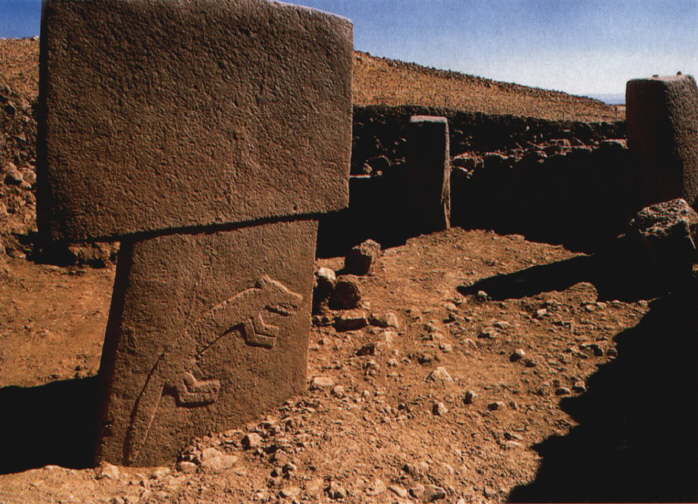
Also, since Urartuans controlled this area way back when, I think it’s interesting to note that Urartu burial chambers contain fox skeletons—the animals were part of death rituals in other words. This connection to religion is old since some of the carvings on the monuments at Göbeklitepe, the oldest temple-like site in the world, are of foxes.

We also keep seeing turtles everywhere—it is apparently testudograeca ibera—the Spur Thighed Tortoise—named for the spurs on their thighs, naturally. They range from the Central Balkans all the way to the Caucuses. They live in ‘scrapes’ and come out during the day to bask and graze. We heard them moving through the brush everywhere we went, assumed they were giant bears with land mines in their mouths, freaked out, and then only found, in the end, turtles. They eat dandelions, mallows, and vetches—all of which I have mentioned here. They like to bask in the sun and will prop themselves up on a rock and extend their necks and legs. The most interesting thing about them seems to be their mating habits—the male gets rather feisty, biting and ramming them as he tries to mount them and mounting other dude-turtles if ladies are not available. They also seem to be surprisingly, in a little danger of extinction.

 
Let me end with one final animal—my Chinese zodiac sign, the wild boar our in scientific circles the Sus scrofa libycus . We see signs of boar all along the paths—they have clearly been rooting in places. At twilight once we saw a heard of them in the fields. People hunt them here, though they don’t eat them, however back in the days that homo sapiens first started settling these lands, they not only ate them, but domesticated them. Evidence for the very first domesticated pigs comes out of sites like Çatalhöyük, one of the earliest human settlements sites in the world and not too far from this area. The story is here.

So that’s it—hopefully I turned on a few lights in the vast information blackout, but really, there is still so much we don’t know about this place. If nothing else, you can look at the pretty pictures.


Saturday, August 17, 2013

Day Trips in Conag--

The homemade candles for the 'ziyaret'--all old Armenian or Urartuan places become shrines for local Alevis
Day Trips in Conag (Or Xolxol, or Yalyadere, or Bingöl, or Kurdistan, or old Keghi)


Conag—our little Kurdish Alevi village in the mountains on the border of Dersim (Tunceli) and Bingöl. This was my second visit. (Here for introductory information)

The last time I was here I wrote a lot about how so much was undiscovered and unknown (Forgotten? Erased?). I had that point hammered in just a few notches more this time around. For a variety of reasons—it’s geographical remoteness, the difficulty of access, poverty, the thirty year guerilla war and the desire on the part of the Turkish government to draw attention away from any region that held a lot of Armenians—no one seems to know anything about the place and yet it is full of wonders. Yes, wonders. I will guide you on two brief day trips we took out of Conag as a starting point (It was a long summer and I have a lot to write about).

Pargasor

We rented a taxi one afternoon, wound down the paved road from the town of Xolxol (Yayladere), and turned right off the pavement onto a dirt and rock ‘road’ that went straight up a mountainside. The road was narrow and hair raising—to the right a straight drop down a cliff. It wound through stunted desert forests of oak and juniper with the occasional strand of tall mountain willows and poplars. We passed the village of Çux and pressed further into the wilderness with absolutely stunning views of a canyon that reminded me of the northern rim of the Grand Canyon back in Arizona—a little less steep and deep than the Southern Rim but more richly adorned with tree cover and colors in the rock. Here on the road to Pargasor the earth had stripes of yellow, red, orange and a kind of powder blue green.

The view from the road between Pargasor and Çux--these are the Dersim Mountains.


The village of Pargasor is in ruins—bombed into dust by the Turkish military. Empty shells of houses line the road. I stop here because, as mentioned before, aside from the road, these pile of rocks might explain one major reason why this place is so far off anyone’s radar. Just down from the village is the ruins of a ‘karakol’—a military outpost that was successfully raided by Kurdish guerillas back in the 90s, when the war here was at its peak. Mutual destruction. A decade ago, a trip like ours would have been impossible, by day, harassed and detained and possibly disappeared by the Turkish army, by night running the risk of confrontation with Kurdish guerillas.

The road winds down and down until finally it crosses a bridge that according to the only resource we could find on the region (Cevat Eran’s Bingölün Yayladeresi) is called Horvank Deresi (Creek)—an Armenian name and probably the final reason that no one knows about this place. The Turkish government has taken great pains for the past one hundred years to erase any indication of a strong Armenian presence here. Horvank—as far as I can find with my online Armenian dictionaries—means ‘Deep Monastery’.  I don’t know that this name is accurate or where Cevan Eran even found it because, unlike in most countries, there are no accurate maps of the region except those in the hands of the army, who, for ‘security’ reasons or else for the usual lack of anything systematic here, have not released it to the public. Finding a decent map of the East anywhere in Turkey has been problematic for me.

Horvank Creek is a picture post card—a rocky stream winding down through a canyon of red walls. The stream itself is lined with a bright green explosion of trees and plants—willows and poplars with leaves shimmering in the breezes; purple penny royal (pung in Kurdish), wild yellow daisies and host of water plants that I can’t identify. The water is full of trout (alabalık) and carp (sazan).
The Horvank (Pargasor) River Valley

Horvank Stream
 
 
North of the bridge is a stunning waterfall over a cliff wall riddled with caves--the name is İşkevt (ishkevt) according to Eran's book. The water seems to be coming out of the rim of the rock itself and falls in a sheet on the rocks below.
The falls of Pargasor (İşkevt?)
 

We hiked up to right side of the falls (past berry filled bear droppings) and found two entrances to what looked to me like cave churches I’ve seen all over the country—from the Frygian valley in Eskişehir to the churches of Cappodocchia. There was a dome carved into the cave ceiling beneath which was clearly an altar. Across from the altar on the other wall was an arched niche. There was a second level of caves above the first that according to a lot of people (locals who came here years ago, hearsay, and Eran’s book) have paintings of some sort on the wall, but they are inaccessible now. You’d have to climb up a slick wet rock face to get to them though there used to be a handmade ladder here whose remnants still hang precariously from the cave entrance. Again, according to word of mouth, these caves have been used over the millenia by various peoples—dating all the way back to prehistoric times. A similar cave up toward the town of Kiğı lies outside the village of Avank and is much larger—with writing in an ‘unknown’ script on the wall. I stood on a large rock that looked out over the valley, a vast wilderness of precipice and peak, and wondered if there were others.

The caves from the outside

The window from inside

The altar--above this is a rather smoothe dome that wouldn't show up in a photo


What in the hell is this place? Would a search of Armenian resources turn up anything? With this being on the borders of Mesopotamia could there be any connection with the birth of civilization? You know—that whole thing? From what I understand, archaeology in Turkey is a precarious business. First, no one official seems to really get why its important to study this old crap (in Olympos for example, the  municipality lets tourists tramp all over the ruins, charges them for it, then instead of using the money to help the researchers, keeps it for themselves). Second, sites with a non-Turkish connection are either systematically neglected or destroyed in the endemic nationalism that plagues this country (a guide in the Aegean region told his audience that Lycians were really Turks and proved that this land had always been Turkish while apparently the Turkish archaeologist in charge of the city of Ani used bulldozers to excavate. Bulldozers!) Third—the dams. There are three dams in the Conag region alone drowning, according to local word of mouth, loads of similar sites under water. The Turkish government has drowned a host of priceless Mesopotamian archaelogical sites and plans many more. Finally, there is a history of foreign scientist running off with stuff, which, given the local attitude toward antiquity might have saved countless priceless objects, but still irks people.

A story about the Urartu castle above the town of Xolxol tells it all. Some soldiers or locals went up their digging in search of Armenian gold as late as the nineties. The place has never been touched by archaeologists to my knowledge. After hours of fruitless digging they finally turned up a few skulls. Burials—often one of the richest sources of information. What do they do? In a rage—for how can they sell skulls?—they toss the useless bones off the edge of the castle walls and smash them below.

Still, what the hell is this place, these cave dwellings on the edge of Mesopotamia with Christian churches carved in their sides? Doesn’t anyone professional want to find out? Is it too late?

Day Trip 2—Quşaxli.

A second day trip out from Conag takes us down the same path—in a taxi on the paved road out from Xolxol and then right onto a road that winds straight up the mountain. This time, it’s the road that goes to the village of Hop but we stop just before the village at a path that winds up a peak that our friend from the village of Xıwek says is called ‘Quşaxli’, a word he guesses is Armenian because he can’t think of what it might mean in Kurdish. (It could be pronounced differently—Khushali? Hushali?) No one outside of Xıwek seems to know this word (or this location). A walking path winds around the mountain with a stunning panoramic view of the entire Peri River valley below, the dam, and all the mountains surrounding it. Behind you are the sharp cliffs and crags of Mount Taru.
Our shadows on the grass

The pillars on Quşaxli at sunset (They're the bumps on the tip of the hill)


At the end of the path, on the edge of the precipice, are two pillars of stones. There used to be three here but the third was destroyed by Turkish soldiers. The remaining two are badly damaged. The whole place was plundered in the perennial search for lost Armenian gold. (Any remotely Armenian looking place in the area has been scavenged ruthlessly—even a Turkish friend of ours visiting the village talked about digging up the pile of Armenian stones that serve as the village shrine to see what was buried underneath). Nevertheless, it is still grand. These stone pillars stand on the edge of a steep drop looking north toward the peak of Silbus, the holy mountain, and the old Urartuan castle above Xolxol.
The view as you walk down toward the pillars

The view of Silbus (Surp Luis?) from one of the pillars

Mount Taru as you walk back toward the main road


The rocks themselves are limestone and full of ancient fossils—I mean full. Every inch has impressions of coral, sea worms, and scallops. The numbers of them are stunning—layer after layer all the way down the cliff. I think of the fossils outside of Byblos back in Lebanon and wonder why no paleontologists has made it to this place to figure out what this ancient sea floor is doing atop the Kurdish mountains.
The fossils on the peak of Quşaxli

 We set against one of the ruined pillars and drank a small glass of beer and munched on homemade helva as the sunset over the mountains. We walk back in the sunset light—the view of Mount Taru is heartstopping. A fox follows us just off the road side. We stop by the Şawez fountain and have a drink of spring water and chill the last bottle of beer as the whole valley sinks into a deep pink and purple sunset light.

Let me say one last thing about why the richness of this area is so little known and explored. Emotion plays a role.  Hours of searching for clues about Pargasor and Quşaxli turned up almost nothing—but I did find lots of gaps. The Armenian presence in this area was eradicated. Churches and villages burned. Records burned. People cast into the Peri River in mass. On the net, I found lots of people—modern descendants of survivors—searching for answers, but they seemed to have run into all of the deadends I ran into. The records are gone. The old names erased. The memories deliberately destroyed. And what happened to the Armenians was repeated, in a smaller way, with the Kurds. People fled from this region in the 80s and 90s as villages were bombed and burned and hacked—very little is left. The memory and history was deliberately distorted by the government. No one who knows wants to go back and explore this place and relive these things—many are afraid to. For Armenians and Kurds alike thinking about what these old places mean is nothing but hurt and pain and loss.

One of our friends in the village told us a story—possibly apocryphal--he had heard from one of our local Kurds. The man’s grandfather had been one of the men who helped round up the Armenians. ‘A lot of us Kurds helped them,’ he said. ‘One of the Armenian leaders, just before he was shot, told my grandfather ‘You’re an idiot if you think this is the end, if you think they aren’t going to do the same thing to you one day.’ I found very few people in the villages who have any doubts about the Armenian Genocide or the role their forefathers played or about how the violence came back to them in the end.


Note: Place names are a perennial problem here—there are at least 4 modern languages competing to name the places in this article (Zaza, Kurmanci, Turkish, and Armenian) with a host of ancient languages preceding them. Plus there is a lot of deliberate changing of names to suit the politics of the time. For an interesting article on that—see here. Pargasor for example could be Kurdish or Armenian—sor apparently means stream in Armenian while it means ‘red’ in Kurdish. So if you are reading this, keep in mind that X would be GH in Armenian, could change to Ğ or G or K or H in Kurdish and in English Kh, H, K, C, or who the hell knows. The word Quşaxli might be Khusakri in another transliteration. İşkevt could be Eshkaft or just shkaut or skevt)


Sunday, June 30, 2013

Gezi Parks Everywhere or How I Learned to Love the Flag


The Turkish flag at a march for a Kurdish victim

                ‘I’m so excited and nervous,’ the middle-aged Turkish woman said into the microphone. ‘I can barely speak. This night, we made history.’

                This was at Yoğurtcu (Yogurt Maker’s) Park two nights ago in Kadıköy. That day, in the Kurdish region of Lice (pronounced lee-jay), police had opened fire on a group of people protesting the rebuilding of a soldiers outpost and killed one eighteen-year old boy, seriously wounding others. In a spontaneous outburst of sympathy and outrage, the crowd at the ‘people’s forum’ in Yoğurtcu park marched through the city chanting ‘Resist Lice! Kadikoy is with you!’ For the first time in the country’s history, white Turks carrying Atatürk flags protested together with Kurds about soldiers killing civilians in the East. The old tradition of calling them all ‘terrorists’ seem to have abruptly died. An ancient wall had been torn down in an instant. Now everyone, Kemalist and Kurd alike were chanting Kurdish slogans. ‘Biji biratiye geran!’ Long live the brotherhood of the people!

The march for Medeni Yıldırım (on right) and others killed during the course of the Protests)
                ‘In 1993 the region of Lice was completely razed,’ the woman went on. ‘I went there in 1996 and saw what was left. No Turk ever saw what happened there, and now we all see. We all see clearly. I am so proud of Kadıköy tonight.’

                One by one, after the march, people came up on the stage at the park’s ‘forum of the people’ and spoke--both Kurd and Turk. It was as if they were pouring out emotions and memories they had stored up their whole lives.

                ‘I met a woman from the East who lost all six of her children. Some to the guerillas in the mountain, some to the military, some to demonstrations like this where police used real bullets and not rubber ones. Six children! Imagine! She was not covered on the news. And now here we are standing up against the state murder of the boy in Lice. Things have changed.’
The diversity of the crowds-LGBT in back, woman in traditional Kurdish clothes in the front, out of frame to the left, nationalists with red flags.
 

                Another Turk got up and spoke about all the people who had lived on this land—Turks, Kurds, Armenians, Greeks. ‘So many were driven away, but we all used to be together here.’ He seemed on the verge of tears. An older Jewish man, a professor of philosophy, got up and read a poem he had written a long time ago about brotherhood. And all the while there were people in the crowd waving the Turkish flag, waving it after the boy spoke entirely in Kurdish, praising the crowd’s solidarity, waved it after the woman cried out that the Kurds had been ignored too long, waved it as the man reminded the crowd of the government’s bombing of 34 Kurdish civilians at Robowski, waved it as the shy nineteen year old girl got up and read nervously from a paper that her eyes had been opened today. The Kurds around me were shocked-they had never seen that crescent moon and star banner lifted in their support.

                Similar scenes were happening all over the country in all the park forums—in Beşiktaş, in Cihangir, in Kugulu in Ankara. With a violent death, the government had seemingly succeeded in doing what every government had failed to do for a century—unified nationalist Turks and political Kurds.

                The park forums popped up after Gezi Park was cleared and sterilized in the police assault of June 15th. It began as a movement to ‘reclaim our public space’ and has ended up becoming the transplanted spirit of the Gezi protest. In Yoğurtçu in Kadıköy—the Revolution Market has resurfaced, distributing free tea, cookies, pastries and water. The Free Library is back and even a piece of the old Revolution Museum—pictures and paintings hang from clothes lines strung up between trees. People camp there over night and every evening around 9:00, thousands gather for the ‘park forum’ where one by one people take the stage and discuss the agenda of the night. Tonight’s topic was the killing in Lice and the new, fragile solidarity, but the previous night they had been discussing the future of the movement.

At the park forum in Üsküdar
                ‘Please keep in mind,’ one young lawyer told the crowd. ‘We are not Occupy Wall Street. This is not a class war. We are united here against intolerance and police brutality.’

                And indeed, he pointed out an important difference between the American movement and the Turkish one. Here, for the first time, people are standing up before others and speaking their minds without fear-a privelege Americans can take for granted. Before Gezi, this would have been unthinkable. You could have been arrested, prosecuted, or at the very least shouted down by a hysterical crowd. Now nothing was taboo. A man spoke about the LGBT movement, how they were in the forefront of the protests. Everyone cheered, Turkish flags were waved.
Forum participants waving their hands instead of applauding (copied from Occupy) so as not to anger neighbors with noice--notice the covered lady in white in the back. It's not all secularists, kids
The Park Forum in Abbasağa Park in Beşiktaş
 

                These forums are taking place all over the country—at last count (the number seems to always be increasing) there were over 87 parks hosting park forums all over Western Turkey (Skim down to Other Parks and Public Forums in the link). Some are small—we went to the one in Üsküdar the other night and found a dedicated, diverse crowd of about 100 people—not a bad number for a neighborhood that is the heart, in Istanbul, of government support. They seemed to be focusing on what the movement could do next. One after the other, people came up and stressed that the problem was not with Erdoğan alone, but with the entire system that had paved the way for one dictator after the other. An old covered woman cheered. Passers-by out walking their dogs stopped, listened, and stayed.
Man Listening to Forum in Beşiktaş--he is at a statue holding a copy of the 1961 Turkish Constitution
 

                Many are large, with tens of thousands, like the one in Abbasağa Park in the neighborhood of Beşiktaş. There, in an amphitheater, people discussed the merits of trying to enter parliament. Some were for finding independent candidates of their own (‘We can do what the BDP did!) recommended one Turkish housewife, referring to the coalition party the Kurds formed with independents like Sırrı Süreyya Önder. A male college student said that they should stay away from the official paths of politics because the system itself was rotten.

                Every Saturday, the groups in Istanbul gather and march on Taksim Square. Yesterday (June 29th) there was a sit in on İstiklal Avenue and Taksim Square in memory of Medeni Yıldırım, the boy murdered in Lice. It was the same scene as the night before—Turkish flags and nationalists marching side by side with Kurds chanting in Kurdish, in the back ground the rainbow flag of the LGBT. The sit-in was held—tens of thousands of us filled the streets surrounded by riot police. I will never forget the two laughing Saudi woman in black burkhas cheering for us and giving us the peace sign. At about 8:30, the crowd started to disperse. Most everyone was heading toward the parks. We hopped a subway with everyone else and headed to Kadıköy where we learned that, almost right after we left, police had attacked the dispersing crowd. More tear gas and rubber bullets and dozens of arrests.
Our sign--Bingol Resist! For the 16 year old girl who was raped by the soldiers in Bingol Province. The soldiers were released.
 

                Today is the Gay Pride parade. A huge turnout is expected—the Gezi movement has come out in strong support of the LGBT community here. Last week the crowds at the Trans Pride Parade were enormous.

A sign at Yoğurtcu--(The State) Will Answer to the People for the Murders' The park forum was canceled because most of the crowd was down in Taksim getting gassed--again.
             (The video shows a protest song in the Square yesterday--'Zıpla, Zıpla, Zıplamayan Tayyiptir' or 'Hop! Hop! If you don't hop, you're Tayyip)

Riot cops blocking passage to the Independence Monument
   Things are changing—but Erdoğan’s government has issued an ultimatum to Twitter (open a branch under Turkish control or we will get rid of you altogether) and started an investigation into bank accounts with ‘suspicious foreign links.’ HuseynÇelik, the AKP’s public spokesman, blames the Lice killing and protests on the same ‘outside forces’ that they blame everything else for. Park forums outside of Istanbul have been attacked by police. It’s a deeply disturbing uncertain time.  
 

The crowd marching from Galatasaray High School with pictures of the casualties of the protests
The ambulance that was really an undercover police vehicle--it kept turning on its sirens and circling the park only to reappear again and do the same thing. It would cut a path through the crowd and then the police would march down the opened path.
The view of the sit in from the front of Burger King
Says 'Justice is on vacation, the killers are in charge'
The press on the roof of Burger King with protective helmets in case gas canisters should rain down and crack their skulls
An old couple slow dance in Yogurtcu Park at the Fenerbahce Fans 'Revolution Cafe'--the music is accordion
The white flag of the 'Taksim Solidarity' crowd

The Saudi ladies cheering us on, sorry about the picture--couldn't avoid the wires.


Sunday, June 23, 2013

The Carnation March on Taksim--3 Pictures That Speak A Million Words


          Three different pictures from last night's Carnation March seem to sum up the whole situation here in Turkey at the moment. I don't have actual photographs of them--sorry--but the description seems more telling anyway. Please bear with me.

1

We passed by Gezi Park earlier in the afternoon. The place is pristine nowadays. A herculean effort has been made by someone to beautify the place—new trees fill the park—as a Floridian, the white blossoms of the magnolias stuck out. Wide sidewalks have been laid and lined with brand new benches. Roses bushes and neatly trimmed flower beds festoon the green lawns—color exploding out of every corner. The government has accomplished in one week what no one could do for decades—turn this place into a pedestrian paradise. This Gezi Park has never existed. No space anywhere in Turkey is this clean. The side of the park that faces Taksim Square is lined with oleanders blooming a cheerful cotton candy pink. But it also has a line of police sitting in lawn chairs guarding the entrance behind police tape. They surround the entire perimeter of the park—relaxing in the grass, their heads propped up on their helmets. Billy clubs and riot shields nearby. This fantasy pedestrian park is completely empty of pedestrians. It is not only clean, it is sterile. The police hover like the angels with flaming swords guarding Paradise—it is right here in front of you, everything that you demanded, in fact, we've made it better than before--but you will never touch it again.

Channel NTV reported, ‘Gezi Park has been opened to the public! Police deny entrance.’

I stood at the steps of the park for the longest time staring past the drowsy cops into the bright, open, and empty greenery of the park. There was something deeply unsettling about the picture. Last week the park was overflowing with life and joy and optimism—with an atmosphere that was more than a festival, more than a communal expression of hope, more than anything I have ever witnessed. And now it was like a Moghul tomb, a place for the dead and forgotten, or no, more like one of the grand North Korean squares that remain ominously empty unless the government orchestrates a rally to force people to fill it. It was pretend public space—a grotesque violation of freedom dressed up to look pretty.  A beautiful menace.

Last night, a march on Taksim was organized to leave carnations in Gezi Park to commemorate the four people who have lost their lives in the recent protest—including one policeman. Tens of thousands gathered on the square and because there were too many people to orderly leave flowers anywhere, people threw them forward into the crowd toward a place where a press conference was being held. The sky filled with spinning blossoms of red and pink and white. The usual people were there--an old couple, a man with long hair and shoulder tattoos, a couple of shirtless football fanboys on each other's shoulders, couples, groups of girls in tank tops, middle aged housewives and fathers with sunglasses on their faces and kids on their shoulders. The crowd shouted the usual slogans. ‘Hukumet İstifa’ (Resign government!). Faşizme karşı omuz omuza (Shoulder to shoulder against Fascism) and our favorite, the nonsensical Zıpla zıpla, zıplamayan Tayyip! (Hop! Hop! If you don’t hope you’re a Tayyıp!!’--which is accompanied by everyone jumping merrily up and down). Instead of party flags everyone (except for a few diehard Atatürkçüs) carried neutral white flags that read ‘Taksim Solidarity’. About an hour after the crowd gathered—hundreds of riot cops and two or three TOMA tanks appeared at the top of the steps that led to Gezi. A small group of people marched up toward them with flowers—determined to lay them in the park. We expected no ‘intervention’ that night. The Istanbul mayor had bragged that ‘we won’t even add a bus stop without public approval!’ It seemed the mood of the government if not conciliatory, was at least ‘Let’s lay low a bit.’

I imagine there were insults thrown at the police—this was a march after 21 days of constant police attacks throughout the country. Arrests have started. Some people have disappeared. Hundreds have been hurt. The government is blaming Jews and foreign conspiracies and riling up its followers with outlandish stories of attacks on mosques. The commissioner to the EU Egemen Bağış is arrogant enough to issue threats to Angela Merkel for question police tactics--'People who try to mix in Turkey's affairs,' he said of her, 'Do not meet an auspicious end.' People are desperate--the protests can't just fade away as if nothing was wrong. I think in part people wanted something to happen tonight, something to show to the cameras of the international press that waited on the roof of the Burger King that things had not gone back to normal, that the same government that attacked its own citizens was still in place and eager to attack again.

Flowers were offered. In answer, a batallion of police broke through the crowd at the steps and marched into the square—people scattered in a panic. A TOMA tank appeared pointing its water cannon at random groups. Everyone had seen on the news how police added liquid pepper spray to the tanks, and how that spray caused severe burns. The square emptied--it looked like a stampede—and then the water cannons fired. I was hit in the leg—there was a slight burning sensation in my nose. I think they added gas but not much—and we dashed into the Ottoman Palace hotel. This is where I saw the second picture that symbolizes this whole movement.
2

In the doors of the hotel, a Saudi woman in black was screaming hysterically at the sight of the TOMA tank coming down the road. She had a chubby little boy in front of her who was crying and looking all around him as if for a way out of the panicked people pressing in on them from the outside. Inside another Saudi woman and a little girl were watching the first woman and sobbing. Someone tried to pull the first woman inside—the doorman I guess—and the woman fought him. ‘Get away from me!’ she shouted in English. ‘Get away from me!’ A crowd managed to pull her back into the lobby and sit her on a couch, and there, the four Saudi tourists gave full into panic, shouting and sobbing and staring fearfully out at the streets. ‘My son is out there!’ the woman started screaming. ‘What’s wrong with you people? I lost my son out there!’ A group of protesters taking shelter from the water cannons tried to calm her. Others went out to look for her little boy. The hotel doorman seemed irritated. ‘Would you please calm down! You’re making a scene.’

It wasn’t that he was cold or unfeeling I think. But we were all so used to these scenes by now. Nothing struck any of us as all that out of the ordinary. The first question was 'why was she screaming?' The second question was 'Why weren't we?' This panicking Saudi family had the normal reaction—the shrieks and screams and tears were far more reasonable than our urgings for her to calm down.

The boy was found—he was with his father. They came in and joined the women and after hugging each other tightly for a second they went back out into the street—their hotel was elsewhere it seemed. We asked the woman if they had to go—it could be dangerous outside. She started to cry, ‘I don’t know!’ And she went out anyway.

Clashes went back and forth all night. While we sheltered in the hotel, a gas attack came up from the direction of Istiklal Avenue and another wave of people ran into the hotel. The gas was trapped in there, however, and pretty soon we were all choking, our eyes red. We ran outside for the relatively fresh air. By this time, my wife and I just wanted to go home. Line upon line of police blocked every exit to the park. The same ambulance kept circling the square—it went by six times--sirens blaring as if it carried a patient. Later , according to a Twitter report, 12 police were seen climbing out of the back. There were undercover cops everywhere. One boy in a yellow ‘Qatar’ jersey sheltered in the lobby of the hotel we were at. An undercover cop in a black hat was yelling at him. ‘Look at you! You were supposed to wear a Fenerbahce jersey! Take it off and turn it inside out!’ ‘But why?’ the boy protested. ‘If I walk around with a shirt inside out, I’ll stick out even more!’ ‘Do it because I said do it!’ the policeman barked. ‘And wear your undershirt over it!’ ‘They’ll know me,’ the boy said, but did as he was commanded and went out into the streets with an inside-out Qatar journey worn beneath his undershirt. Taxi drivers waited calmly in their cabs as tanks chased protesters and gas plumes billowed around them. Cops, too? Dozens of undercovers reportedly pose as cabbies.
The crowd's chants changed.

'Police, don't betray the people!' they cried
'Don't throw stones!'

At some point, during one of the gas attacks, an aging, moping street dog loped into the hotel and cowered just behind the sliding glass doors. No one chased it out. The doorman called it over away from the door and the brunt of the gas and let it stay inside until the air cleared and the crowd went out again. The dog reluctantly followed them with an air of quiet resignation. I’ve seen pictures of the horrible effects of the gas on street animals. Kittens blinded, cats and dogs choked to death, dead birds.

The police filled the side streets. They were arresting people, according to rumors on the street. Istiklal Avenue—the main shopping artery—was filled with gas a mile down toward Tünel. Police were using rubber bullets again—I saw a rifle in one young officer’s hands. We hesitated going home—not wanting to get rounded up or stuck in a cloud of CS. Then we discovered, strangely, that the metro was still open—and made for the entrance. We reached home without incident--you would never know from the rest of the city the chaos at Taksim.
 
3

The final picture I would like to share is one that I wrote about in an entry a week or two ago, but one that keeps coming to mind again and again. A journalist friend said to me today that ‘As crazy as this is, this is still a first world police intervention, not a third world one.’ There were no massacres or disappearances or deliberate murderers. For the most part, no one was using real bullets. ‘But the third world part,’ I said. ‘The really scary part is not necessarily all this police violence, but the arrests that follow. People are starting to disappear into the jails in successive waves—and we know that with all the falsified evidence, the kangaroo courts, the fanatical judges and secret witnesses that they will never come out. Hundreds of people to disappear into Turkish prisons.’

Remember, please, the new courtroom I saw in Silivri during my father-in-law’s trial. In the old courtroom, there were about 80 seats for the press to the right of the prosecutor’s podium. Now the seats for the press are in the back corners, slightly lower than the rest. About 45 seats have been added for defendants—there were already over 200 in the old one. In the old courtroom there were about 150 seats for defense lawyers to the left of the judge—a huge number yes, but in the new courtroom, on each side of the judge are 180 seats for defense lawyers. A total of 360 seats!  This is a symbol of the future as the AKP would have it—gigantic mass trials, with the press given a symbolic but marginal place in the back, out of the way and without dignity. This is the fate awaiting all the doctors and lawyers rounded up by the police for helping protesters (in the government’s increasingly fanatical minds—terrorists helping the ‘interest lobbies’ and ‘dark foreign powers of infidels. Even now the PM is giving a speech in Samsun where he rants at a crowd of true believers about the heathens who go into mosques with shoes and get drunk and attack head scarf women. 'One of our prayers' he shouts. 'Can defeat all of them.)

A sketch I made of the courtroom--cameras are forbidden--three judges up front, the prosecutor (savcı) to the right.
3 defining pictures. A triptych of the State to come. The sterile, empty, newly planted park; the panicking Muslim tourists and jaded locals; the restructured courtroom. We will do our best to look just to the outside, mocking you in the process, and rending all justice forever out of reach of those who oppose us. We will accustom you to this treatment so that you find it normal. You will forget what you are entitled to. And in the end, we will judge you. You will come to our courtrooms and we will lie about you and no one will question us.
And you will never leave.

Friday, June 21, 2013

Democracy in the Parks


                The ‘waves’ of arrests have started. Yesterday, it was announced, that 2 out of 20 ‘supsects’ will be charged in the Çarşı wave (Çarşı is the Beşiktaş football fan club who lead the way against the police in many of the protests). The day before that, the news reported that 33 of 97 would be charged in the previous days wave of arrests. And that’s in Istanbul alone—there are more ‘waves’ in other cities.

The anchormen and women state these figures blandly, not questioning the logic behind the arrests at all. It’s the ‘Terror Intervention’ division of the police. They are conducting house raids early in the morning. They are stopping Terror.

It is all so familiar—three entries ago I talked about how this would go down. I remember how it felt back in 2011, when every day on the news you heard about how many were charged in that day’s ‘dalga’ (wave) of arrests of Kurds. The unquestioning, docile news teams spouting out the Turkish Government’s version of events and everyone unquestioningly swallowing every word because they had been trained from preschool to regard Kurds as terrorist and every kind of political activity as splittism provoked by secret forces bent on destroying Turkey.

So will all the unrest and horror of the last three weeks just get swept under the rug or sent to prison?

                The standing man protests continue—people stand in silence along the wharf and at the Bull in Kadıköy. People stand at the meeting for press freedom in Brussels. And crowds still fill Taksim Square. But now the Gezi Park movement, with Gezi itself lost, has spread to all the parks of Istanbul this week. At 9:00 the town meetings start. We went down last night to Yoğurtçu Park to see what was happening.
               They’d set up a stage in the park where anyone could sign up to speak. The audience showed their approval by waving their hands in the air, a tactic they probably coopted from Occupy Wall Street, but with the very logical reason of not wanting to disturb the neighbors who surround the park with clapping. A girl spoke about the corruption in the last election—the buying of votes, the casting of ballots by the dead. One foreign resident stood and suggested that Turkey call for foreign election monitors to ensure that there is no tampering with results. A lawyer stood and, after greeting all the undercover cops in the crowd, to mass laughter, urged cooperation and persistence. Many stood and spoke about the need to organize.

                Some of the character of Gezi Park has been brought to each of these mini-Gezi’s. Last night there was a ‘Revolution Market’ where cookies and drinks were distributed for free. A wide range of people were present--most of whom would never have been caught dead together a month ago. One man spoke on behalf of the LGBT community whom, he said, had been at the protests from the start, had born the brunt of a lot of police violence, and who remained one of the most oppressed groups in the country. Everyone cheered their support. Another man stood and spoke about the injustice in the investigation into the massacre by Turkish warplanes of 34 Kurdish villagers--most Turks regarded this issue as irrelavent, believing, as their news told them, that these 34 boys were all smugglers anyway, and probably terrorists. But everyone cheered their support. Whatever else comes of these townhall style meetings, these people are, perhaps for the first time, getting together and listening to each other’s views and building tolerance. I can’t stress enough for American friends what a radical change that is for Turkey. Your political views can get you arrested or attacked here. People defend their positions with hysterical screaming and protests. It is against the law to insult Atatürk and Turkishness. Anyone against you is a terrorist. For all of these people with different opinions to sit around quietly and listen is a revolution of its own.

                Sadly, there was some bad news. A park in another district, Yeniköy was attacked by amob with clubs and knives. The mob, about 30 people in all, was apparently organized by the District Mayor (Muhtar), Engin Cevahiroğlu. If there were any justice in the current rulers of this country, he would be immediately relieved of his position and prosecuted, but we save that sort of justice for protesters standing silently in the squares. Those against us get the Gas, those for us get pardoned.