Thursday, March 11, 2010

Loving Tulsu...Part 2

Here is part 2...I forgot to mention that this is from a section of the book called "Stories that shouldn't be laughed at"

"It was on a hill with a broken sidewalk, this store. A girl passed in front of us, or so I'm told. A girl with long hair, about fourteen or fifteen, or so I'm told. I said suddenly, "I am going to marry that girl!" or again, so I'm told. You see, my father repeated this story so much that just from his explanation, it took on a reality in my eyes, and this girl became something solid and concrete. My father told it and told it, and this thing I didn't remember became like something I had actually lived. Tulsu was the girl I saw that day."
"If that's the case, then she must be passed eighty by now."
"Why?"
"Well, considering that when you were five she was fourteen or fifteen..."
"But Tulsu doesn't get old!"
"You mean, I guess, you saw her after that?"
"I am always in search of her. What other reason could I have for being in this city? Tulsu is a woman I don't know waiting for me, living in a city I don't know, someplace in the world I don't know about. I believe I will find her and am always looking. This is why I am wandering the world!"
"Have you never seen her since that first time?"
"I've seen her! I was thirty years old then. And again, I was in the big capital city of some country, looking for her. I was going down the escalator in a subway station when suddenly, beside me on the escalator going up, I saw her. Tulsu. But she was twenty years old. She had brown hair, cut very short. She went right by me. My voice cried out from deep inside me, "Tulsu!!!" But the escalator I was on had already gone down."
"Have you seen her any other times."
"I saw her. A few more times. On the banks of the Danube river, the first time I went to a city there. I was forty then. I had just gotten off a train. The station was very crowded. People were getting on and off, talking hurriedly. And there, in that confusion, I ran right into her. When I lifted my head and looked up, I saw a girl of about twenty five with big blue eyes and blond hair...Tulsu. We looked at each other a moment. She had dropped a package when we collided. I picked up my suitcase off the floor, then her package, and gave it to her. "Excuse me," I said. She thanked me. Then she took the arm of a young man standing next to her and got on the train.
After this meeting of ours, it was about five or six years. I saw her on a bus in a city in the far east. We were together on the same bus for four stops."
"You didn't speak to her?" I asked.
"How could I? We didn't even know the same language! One time I saw her at an international gathering in a small northern country. My Tulsu. We sat across from each other for a short time at the same table. Next to her was her black husband."
"Her husband was black?"
"Yes. Tulsu was black, too. An extraordinarily beautiful black woman."
"And again, you didn't talk to her?"
"Would you happen to have three extra bulletins," she asked me. I didn't have any extras, but I gave her mine and thanked her. The years passed, and I was constantly searching for her.
"But you were finding her, too."
"Finding, yes, but how? Just for a moment. It was like seeing a flash of lightning. Like a flame that suddenly flared up and died away. As soon as I found her, I lost her again. This is no reunion. To reunite with her, I have wandered circles around this world. I saw her in the palace of one of the Balkan capitals. Tulsu. She wasn't even thirty yet. I was already past sixty. She was sitting, leaning against the wide rail of a marble balustrade, between two men. In her hand was a fat-bellied glass filled with a bright red cocktail. The more she laughed at the bantering of the two men, the more she sloshed around her red drink. Her hair was red, her eyes a dark black.
"Five or six years ago, in a place completely unexpected...but then, it's always in a place and at a time I don't expect that I see her--my Tulsu. I had entered a country bank, took one look around, and saw her a little on the other side of the bank talking to one of the tellers. Her eyes were green, her hair in a bun. She immediately left the bank, got in a car waiting at the door, and drove away.
"And for the last time, I saw her last year, at a motel on the shore of the Mediterranean. She wasn't even twenty, a slender little thing. I was reading a book in the shade of an arbor in front of my room. "Excuse me, what time do you have?" When I raised my head at the sound of that voice, I found myself facing Tulsu. Next to her was a young man. They must have just come from the sea, their bodies were freckled with drops of water. I told her the time. She thanked me. I thought my heart would stop. They left, and I never saw them again at that hotel."
Again, we finished our wine.
"Shall we drink one more?" I asked.
"Let's do it," he said.
The dark Mediterranean woman brought one more bottle.
"When I explain my passion for Tulsu to someone, they always make fun of me. Tulsu was hear or there, they say, and send me from running from place to place. They look down on me, think I'm crazy. The first person to ever hear about my passion for Tulsu and not make fun of me...is you."
With great pity, I asked, "Why do you love Tulsu so much?"
"I have many reasons," he said. "These few times I have searched and been unable to find her, or else have found her but have been unable to be with her, my passion for her has grown all the greater. It is such a passion that, as I move through life, I am in flames, a raging inferno, and it burns. My insides are hot coals! coals! I know that one day, after not ever coming together with her, this fire inside will consume me and everything will turn to ash. But Tulsu is that good, so good that....Why so good? Because she never fights me like the other women I have been with when I have been wrong and mistaken them for Tulsu. She has not created a reason to fight. She has not used her relations with me to nourish her own self interest, nor had a gluttonous appetite, never satisfied no matter what I gave her, nor tricked me nor herself with the words "I love you". Was never two-faced, nor kept hidden grudges. Because we never shared any time together to make any of these things possible. Tulsu remains a momentary life for me, without a third dimension. I can live her in the flash of a lightning bolt. For this reason, I love her and will always love her. I have no other job but loving her. And I never will."

Tuesday, March 9, 2010

Aziz Nesin, "Loving Tulsu" Part 1

My first full story.....

See full size image
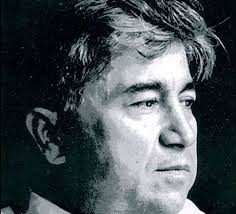
Aziz Nesin is a comic writer. He was born in 1915 on Istanbul's Heybeli Island (where I swim in the summer) and died in 1995. There are a few interesting stories about him--he was in the hotel that religious fanatics tried to burn down in Sivas where an Alevi cultural festival was being held (my girlfriend is Alevi). He also requested that no one be told where he was buried. His body lies in an unknown location on his foundation lands, a foundation he started in the seventies to educate, feed, and shelter poor kids. He was also a loud critic of the military government after the 1980s coup and translated the Satanic Verses. Delal compares him to Flanner O'Connor, though he is much kinder toward his characters. There is the same cartoonishness, the same sense of humor, and, as she says, you generally know where the story is going to end, but its fun getting there. Here's part 1 of "Loving Tulsu"

Loving Tulsu
By Aziz Nesin
Translated by Jeff Gibbs

Dear V.D.
When you got my telegram saying "I love you, Tulsu," you must have been really shocked. What did it mean, and who was Tulsu?
It's true, it's not something someone in their right mind would have done. But I can't say that when I wrote that telegram, I was entirely in my right mind. I was like a sleepwalker that day. I sent that telegram to you almost against my will.
That night was the first in a week that I had been left alone in this city considered one of the most crowded in the world, a city in which I was a stranger. A stranger's solitude is more magnified when he's in a strange city. And because of this loneliness, it was like the air I found myself in had thickened and turned into a syrupy paste, and I was struggling to budge even an inch inside that past. In this mood, I had no other hope but to drown my consciousness in booze and lose myself. I did not want to go to the expensive restaurants and casinos around the hotel where I was staying. Their starched people, starched table cloths, and starched conversations were not what I was looking for. I just wanted to be left alone among wrinkled people, wrinkled table clothes, and wrinkled conversations.
I ducked in an out of side streets, so much so that after a time, I had lost myself inside that big city. I love abandoning myself and getting lost inside the flow of a crowd in a big city in which I am a stranger. Even if worse came to worse, I could always hop in a taxi and return to the hotel.
I found a few watering holes to my liking. I went through the doors of a few of them, and at a few of them I just looked inside the smoky window pane. I found a place with an empty table where I could be left to myself. Only one empty table remained. It had been left empty because it was on the path to the cloakroom. Even the buzzing of conversations stank of alcohol. There was nothing there to break my strangerhood. There were three women serving. One of them was a dark Mediterranean woman who came to my table to take my order. I told her I wanted white wine, a salad, and a mixed cheese plate. This dark Mediterranean also showed me the kindness of bringing a single red carnation in a small glass vase. That single carnation was not one of the huge eye-catching ones, but one of the small ones with a slightly burnt smell. I smelled it as if I wanted to take every last bit of its scent into me until there was nothing left. I drank, and slowly, gradually I began to feel like myself again. I was facing the door. I didn't see it open, but I did see the man standing at the entrance. He was about my age. He stood erect, eyes searching the room for an empty place to sit. He came up to me as if he had found what he was looking for.
"If it's not too much bother, may I sit here, too?" he said.
"Sure, go ahead," I said without much enthusiasm.
I didn't want to share my solitude, and certainly not with someone like this. I was annoyed. He thanked me and sat across from me. And just like me, he ordered a mixed cheese plate, salad, and white wine from the dark Mediterranean woman. Just like I had done, he took a long deep smell of the carnation.
"I like this this tiny, fragrant carnation much better than one of those big stuck-up ones that have all the showy display, but no scent. Although, these are like all modest things, they don't tout themselves, and how they smell! That scent--burning burning."
He raised a full glass of wine. "Cheers," he said.
I clicked his glass and said, "Cheers."
And so the conversation had opened. He told me he was a stranger here and had been here a week.
"Me, too," I said.
And because I felt the need to bring it up in the interest of getting to know one another, I asked what line of work he was in.
"I love Tulsu," he answered.
He must have misunderstood the question.
"I was asking about your job," I said.
"And I answered," he said. "My job is loving Tulsu."
He felt a need to clarify, somewhat put off by my surprise.
"Is there a job more important in this world than loving? I have loved Tulsu until this very moment, and I will love her until I die. The greatest happiness is when people do the job of loving. Yet, the majority of people are doing the job of not-loving."
When I'd asked what job he did, I had wanted to know how he made his living.
"What does it mean to say you love your job?" he asked and then again answered the question himself. "Every day, twenty four hours a day, even in sleep, I think of the thing I love."
We finished our wine and had her bring another bottle each.
The lover of a man that age! Imagine! Who could she be?
"May I ask your age?" I said.
"Like everybody, you find it peculiar that someone my age could count loving someone as his only job," he said. "I am seventy."
"That means we're the same age."
"Of course, you're curious about Tulsu, right? Everyone is curious, because a man's lover, at the age of seventy..."
"It's true. I am curious about this fortunate woman you have dedicated your life to."
We clicked our glasses together again, said "cheers" and drank.
"My first glimpse of Tulsu was like something between reality and a dream, because I only remember that first glimpse from what my father told me. I must have been four or five years old, or round about. It was late one evening, and I was sitting with my father in front of one of his friend's stores..."

Monday, March 8, 2010

The Wind Gods


Yesterday was an odd Sunday. I spent two hours doing something I never do--chatting online, but it was with two old friends I haven't spoken to in ages, and I came out of the rather harrowing conversations (at least in the case of one of them) feeling a deep sense of relief. I needed to walk, and so I left my apartment and headed down to the sea. On the way is an old graveyard next to the parking lot of Fenerbahce's giant soccer stadium. When you walk by at night, you can see a green light (the color of Islam) glowing from a tomb right by the fence. There is always a night watchman there. But this was during the day, and though I have walked by this cemetery a million times, I have never stepped inside.

The glowing green grave is apparently the final resting place for a local minor saint. You find this sort of thing more often in rural Anatolia, but they are in Istanbul, too--dervishes and holy men revered for their wisdom during life, and now seen as protectors in death. An old man in an army green jacket was outside the fence praying when I came. Inside the cemetery walls is all leaf and grass and ground gnarled by tree roots. Most of the grave markers are written in Ottoman--using Arabic letters. A small black and white kitten ran up to me as soon as I passed through the entrance and walked with me through the cemetery, at one point trying to reach my head by scaling my legs and trunk. A monolith at the entrance was to a man called simply "Milli Sehit Kemal Bey". National Martyr Kemal. He had fought at Gallipoli and been some sort of governor at Izmir, but was driven out of power by the postwar occupiers, their political "lackeys", and "Armenian agitators." In light of the recent turmoil over the genocide recognition in the House Foreign Affairs Committee, it makes me wonder just what it was he was involved in.

The path to the sea takes you past many relics of the past. Next to the train tracks is an old crumbling hamam that used to belong to an Ottoman millionaire. It is covered in graffiti and still surrounded by apple and cherry trees, blooming now in our unseasonably warm weather (survivors of the millionaire's garden?). Old Japanese poems used to compare the flowers on these trees to snow, and with all the other trees bare of any leaf whatsoever, they do indeed look like remnants of a fresh snowfall. There is also a creek once named Turtle Creek, but not referred to mostly as Shit River because of the smell (my high school students had no idea it had a different name). It winds from the Asian hills down past the stadium to the Marmara Sea.

The sea has been gorgeous recently. The colors on its surface like thick oil paints--today it's silver and cobalt blue. Last week, when I was jogging, it was a heavy purple. A storm is coming in. The weather is so strange here. On the European side it might be sunny, while on our side its pouring down rain. On the south side of the European shore there might be no wind, while on the north it's blowing hard. It's like this today. This makes the rain falling on the opposite side do odd things. To the West, where the sun is setting, the rain is coming straight down out of the clouds. And its a deep, black-red on orange sky. More easterly, toward the palace museum, the wind has bent the rain severely to the right--nearly at a 45 degree angle--and its dark gray on purple. Yet it's still clear blue sky above me on the Asian shore. The water is filled with black moorhens and white gulls. Cormorants are diving for fish. The seaweed is an electric green (though this color is made possible by the 'nutrients' flowing out of Shit River). Piles of it grow around orange rusting pilings.

The winds in Istanbul are fierce, stronger than Boston's even. They each have a name. Poyraz is the Northeast wind. Lodos is the Southwest. There are others, but these are the main ones. Both are responsible for ramming ships against the shore. You can see several wrecks from Kadikoy all the way down to the entrance of the Bosporous. According to legend, there was once a king on the Asian shore who fell afoul of the gods somehow and was tormented daily by the Harpies. One day, the wind gods' ship landed in the kingdom and the king begged them to help him get rid of the Harpies. To this day, Boreas (Poyraz) and Lodos chase the Harpies around the Marmara sea and when you feel the wind hurling rain and waves against you as you walk the shore it is from the power spilling out of their battle.

On my way back from the sea, I pass by the fishing shacks along Shit River. One man, a jazz looking dude who wears a beret, sports coat, and has a goatee, has a pet rooster and duck that sit next to him like dogs as he listens to the radio and reads. A few men are tending to their boats. And Lodos is raging, making the masts tilt left and right and the duck croak in annoyance.

Friday, March 5, 2010

My First Tiny Translation--this is a good story.

I've been hoping to use this blog to put up a few translations of Turkish writers, but somehow the task has been daunting, and I haven't done it. So today I'm starting with a very short exerpt from a book of essays by Sunay Akin, called "Onlar Hep Oradaydi"--They Were Always There. Akin is a poet, and each piece compares some aspect of Native American history with Turkish history. (Interestingly, he is also a major television host and owner of Istanbul's toy museum and has a personal collection of over 7000 toys dating back some 200 years!)

First, a prelude before I get to the meat of the story. In one essay, called "The Indians Who Sent a Message to the Moon," he spends the first half talking about the Apollo astronauts training in the Arizona desert in Navajo Nation. Apparently, an old Navajo asked what in hell they were doing in their funny outfits and when they explained it to him, he wrote a message in Navajo and asked them to take it to the moon. The curious astronauts had it translated. "Beware of these people!" it said, "They'll take your land!" Akin goes on to talk about the Navajo code talkers in World War 2 (a story I'll abbreviate here as American readers should know already). Basically, for years speaking in Navajo was forbidden. Navajo children were forced into missionary schools and if caught speaking their own language, severely punished. During WW2, however, the Japanese were breaking all of our codes and so the top brass got the idea of using the notoriously difficult Navajo language to transmit messages and suddenly, this language that had been outlawed for years upon years, its speakers tortured, became a necessity.

Akin then switches locales to Turkey and has this to say.

"Some teachers were trying, in the same way, to control language in our schools in Anatolia. One teacher even told the children that if they spoke their native language (Kurdish) at home then it would leave a mark in their mouths. So every morning, he had the students stand across from him and open their mouths so he could inspect them. All of them stood with their tongues sticking a little out of their mouths. In their hearts was the fear that he would see the Kurdish that they were speaking in their homes.

Kamber Atesh, having been convicted by military tribunal after the coup of September 12, found himself in Mamak Prison. Since the government intended to keep him in prison all his life, they put him in an isolation cell in B Block. One day, a guard gave a letter to Kamber as he languished in the middle of those four walls. The letter said they were going to bring his mother to him for a visit. She was sick and had written, "Let me see my son one last time before I die!"

Later that week, Kamber Atesh, when he heard his name called over the loud speaker, emerged as if he were a caterpillar that had turned into a butterly fluttering its wings to the bright world. Behind the barbwire fence stood his brother, and of course, his mother as well.

Waving was forbidden. Speaking in a soft voice was forbidden. The old woman, on this day of her first and only visit after months and months of not seeing her son, asked him, "How are you today, Kamber Atesh?"

Kamber Atesh said, "I'm fine, Mom. I'm fine." And as soon as he answered her, she asked again, "How are you today, Kamber Atesh?"

"I'm fine," he answered. "Very good. How are you all doing?" After a short silence, the woman said in a broken voice, "How are you today, Kamber Atesh?"

At that moment, his brother explained that this was the only Turkish sentence that his mother had been able to memorize on the way to the prison. She could say nothing else.

"How are you today, Kamber Atesh?"

This old woman had raised her son with lullabies in a language forbidden now to speak with him. On the wall behind her was written in giant letters, "Speak Turkish! Speak It Alot!"

Here are two lines from an Anatolian bard.

Dil bir anadır
kucağinda çocuğu

"Language is a mother,
And her children are in her embrace."

Note: The military coup of September 12, 1980 swept all sorts of people into jail--from leftists to Kurds to any sort of political opposition, real or imagined. My Turkish teachers brother died in prison, suspected of being a leftist. Unlike, Kamber Atesh, he never got even one visit from his mother or sister. Kurds suffered perhaps more than others. Their language was outlawed. Even possessing a book in Kurdish could land you years in jail. It was a time of unprecedented cruelty, but to this day, many people insist that it was necessary to prevent the country from following into the hands of "the Islamicists", a boogeyman dangled in front of the people's eyes whenever the army needs to seize control.

Wednesday, March 3, 2010

A bright light in all the 'bok'

I assigned my students to do a travel report from an imaginary planet. One of my kids in 9th grade wrote 'On my planet, the most intelligent beings are cows. They can sing and make speeches. They are pink and have wings and fly all over the world. Sometimes it rains milk.'
Better than bird milk on the shoulder I say.

It's all a load of.....a Turkish lesson!

In teaching one of my language classes in this elite private high school on Istanbul’s Asian hills, I have oft been tempted to compare the lamblings of my tenth grade language class to zoo animals and the task of teaching them to zoo keeping. I might even compare them to farm animals (although they are far less useful than your average mule or chicken—I won’t get in trouble for eating a chicken—and nowhere near as docile as cows). However, to do this here, now, in this blog would imply a lack of respect for their basic humanity, so I will refrain from the jokes I was about to make regarding their grooming habits and egg laying abilities. In fact, to protect them as much as possible, I will even use pseudonyms.

Okay

One of the most difficult students is Elsie. Elsie often plays on her phone in class and sometimes attempts to sleep, laying her huge head down on her desk and staring at me with those uncomprehending bovine eyes of hers as if she had just been struck in the head with a hammer or perhaps been ‘treated’ too much with a large electrical baton. Bonzo is the worst of the male students. He leaps about the class, is never in his seat, and makes loud hooting noises from his perch by the lockers as I attempt to speak over him. Bonzo drives me absolutely bananas and if some sort of disease or poacher were to put him down, I would not shed a tear. Even Bossie, a fairly bright girl generally stares dully at the floor and I have to milk her for even the shortest of answers.

These kids have taught me a lot about shit. That is, words and various synonyms to express poop and all its various permutations. First, you have the word bok. I might say ‘Bonzo bok bir oğrenci’ 'Bonzo is a shit student', or ‘her seninyaptığı şey bok olur, Bonzo’ 'Everything you do is shit'. Another word is dışkı or ‘feces’. For example, ‘Bonzo, sınıfta dışkını atma!’ 'Bonzo, don’t throw your feces in class!' Gübre means ‘manure’. I might tell my colleague, ‘Elsie’nin gübresi tarlaya koyup, çapalarsak, ekinler daha çabuk büyüyor’ 'If we take Elsie’s manure and hoe it into the fields, the crops will grow faster.’ Children use the word kaka, just as Spanish speakers do. I have more than once had to say, Yine mi bezinin içinde kaka var? ‘Do you have doo doo in your diaper again?’ Finally, there is tezek, dried manure for burning in the winter. After sweeping up after a day of classes, the janitor might say to me, ‘Oğrencilerin gübresini toplayıp kışlık tezek yapalım.’ Let’s gather up the students' manure and turn it into fuel for our winter fires.’

Thank you my students. What crap I would not know if not for you!

Monday, March 1, 2010

Random Monday Stuff

Stumbling out of the house at 7 this morning to catch the service bus to school, there's a red Volkswagen bug parked half on the curb in front of the entrance. It was completely covered in dust, and someone had written on the back windshield, "Beni yika"--"Wash me!"

Every Monday morning, the zoo animals gather in front of the Turkish flag and are shouted into silence for a rousing rendition of the Turkish national anthem. I have to stand there, too, but of course, I don't sing or anything. Instead, this morning, I ran my eyes over the Vice Principal's office and counted how many pictures of Ataturk she had. There were thirteen in all. To be fair, three or four of them were on advertisements or posters of some sort, but that leaves quite a lot, which means she purposely put nine pictures of the man around her office. Now back home I can see having one picture of George Washington or someone along those lines lurking about a school official's office, but nine? Delal suggested that I file a complaint--namely, that the Vice Principal is not patriotic enough and should have even more photos. Apparently 31 more people were arrested on Friday for a "coup plot" against the government. I'm sure I could get fingers pointing her way.

Apparently, in the city of Tekirdag, in Thrace, the local people cannot pronounce H. So the name Hakan is pronounced, "Akan". While words that normally don't have an H, suddenly get one. So the name Aylin, becomes "Haylin." This is a lot like the famous New England R, where "mother" becomes "mothah" and "data" becomes "dater".